About Belgravia
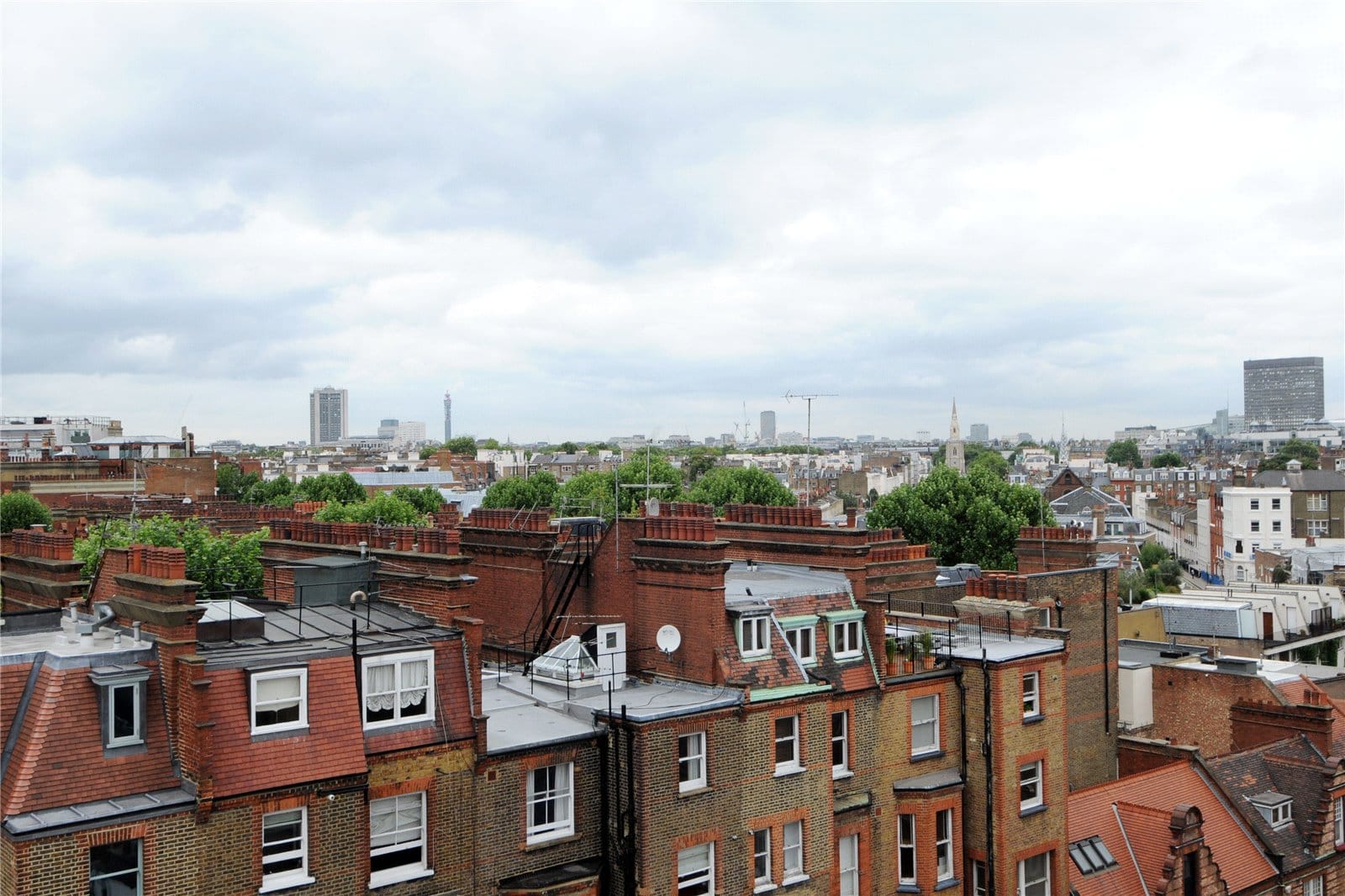
Belgravia sits in the City of Westminster, just southwest of Buckingham Palace, with a small western section crossing into the Royal Borough of Kensington and Chelsea. Knightsbridge lies to the north, Mayfair and Green Park to the northeast, Pimlico to the south and Sloane Street towards Chelsea to the west.
Before the nineteenth century, this part of London was known as Five Fields, a stretch of marsh and grazing land crossed by footpaths and more associated with highwaymen than houses. Everything changed from 1826, when Richard Grosvenor, 2nd Marquess of Westminster, secured permission from Parliament to develop the land and brought in master builder Thomas Cubitt to design the new estate. Between 1830 and 1847, Cubitt laid out the white stucco terraces, crescents and garden squares that still define the area today, centred on Belgrave Square and Eaton Square.
Much of Belgravia remains part of the Grosvenor Estate, though the Leasehold Reform Act 1967 forced the sale of many freeholds to former tenants over time, which is why leasehold structures and enfranchisement questions still come up often when buying or selling here. After the Second World War, many of the largest houses stopped being family homes and were taken over by embassies, charities and professional institutions instead, something still visible in the number of flags flying over Belgrave Square today. Since the early 2000s, though, more of these grand houses have gone back to family use, helped along by sustained demand from buyers with international wealth.
The private garden at the centre of Belgrave Square, known as Belgrave Square Garden, remains one of the largest private gardens in London, open only to key holders. Compared with neighbouring Knightsbridge, which leans towards department stores and hotel life, or Chelsea’s longer run of independent shops along the King’s Road, Belgravia stays quieter and almost entirely residential, built around housing rather than retail or offices. The people who live here are a combination of long-standing London families, diplomats attached to the area’s embassies, and international buyers drawn to the privacy that the garden squares and mews streets allow.
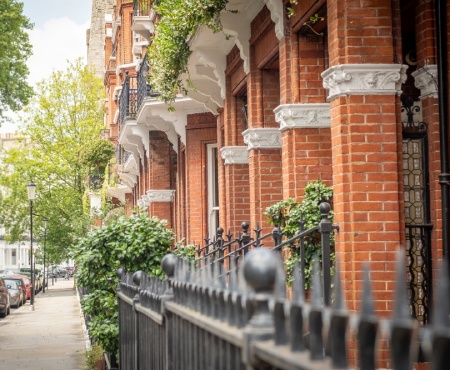
What sets Belgravia apart from most of Central London is the sheer consistency of its planning. Cubitt and his successors used the same palette of white stucco, brick, slate and painted timber across almost every street, and new building has been kept to a minimum ever since, so the early nineteenth century layout is still largely intact. That consistency, combined with its position between Hyde Park, Buckingham Palace and Sloane Street, has kept demand for property here exceptionally resilient, even when the wider London market cools.
Transport Links
Belgravia sits close to the middle of London, so getting in or out rarely takes long whichever way you choose to travel.
- Car & Road: The A4 and the Inner Ring Road run along the edges of Belgravia, giving good links out to west London and into the City. Motcomb Street is closed to traffic between midday and midnight, so it’s worth checking before driving through. Parking is mostly via Westminster pay and display bays, with NCP and Q-Park sites near Knightsbridge and Victoria for longer stays.
- Bus: Frequent bus services run from Grosvenor Place into the West End and the City, covering most of the surrounding streets.
- Train: Victoria Station sits just east of Belgravia and is one of London’s busiest interchanges, with mainline trains across the south of England, the Gatwick Express running direct to Gatwick Airport in around 30 minutes, and Victoria Coach Station alongside it for longer distance coach travel.
- Tube: Three tube stations sit within a few minutes of most Belgravia addresses. Knightsbridge and Hyde Park Corner are both on the Piccadilly line, while Sloane Square and Victoria run on the Circle and District lines. From Knightsbridge, Sloane Street leads straight down towards Sloane Square in around ten minutes on foot.
- Cycling & Walking: Belgravia is built for walking, with Santander Cycles docking stations dotted across Belgrave Square, Eccleston Place, Ebury Bridge and several other points, and most of the garden squares and mews streets are far quieter than the main roads around them.
- Airports: Heathrow is the nearest major airport, reachable in around 45 minutes on the Piccadilly line from Knightsbridge or Hyde Park Corner.
Belgravia also links easily to the surrounding areas of Knightsbridge, Chelsea and Pimlico, all within a short walk.
These links matter just as much to tenants as to owner occupiers, and the short walk to three tube lines and a major rail terminus is a factor that consistently supports rental demand from professionals working across central London.
For more information about the transport options in Belgravia, take a look here.
Property Market
Belgravia’s property market is shaped by its history as a single, carefully planned estate, and the Grosvenor family’s continuing ownership still influences how property here looks and trades.
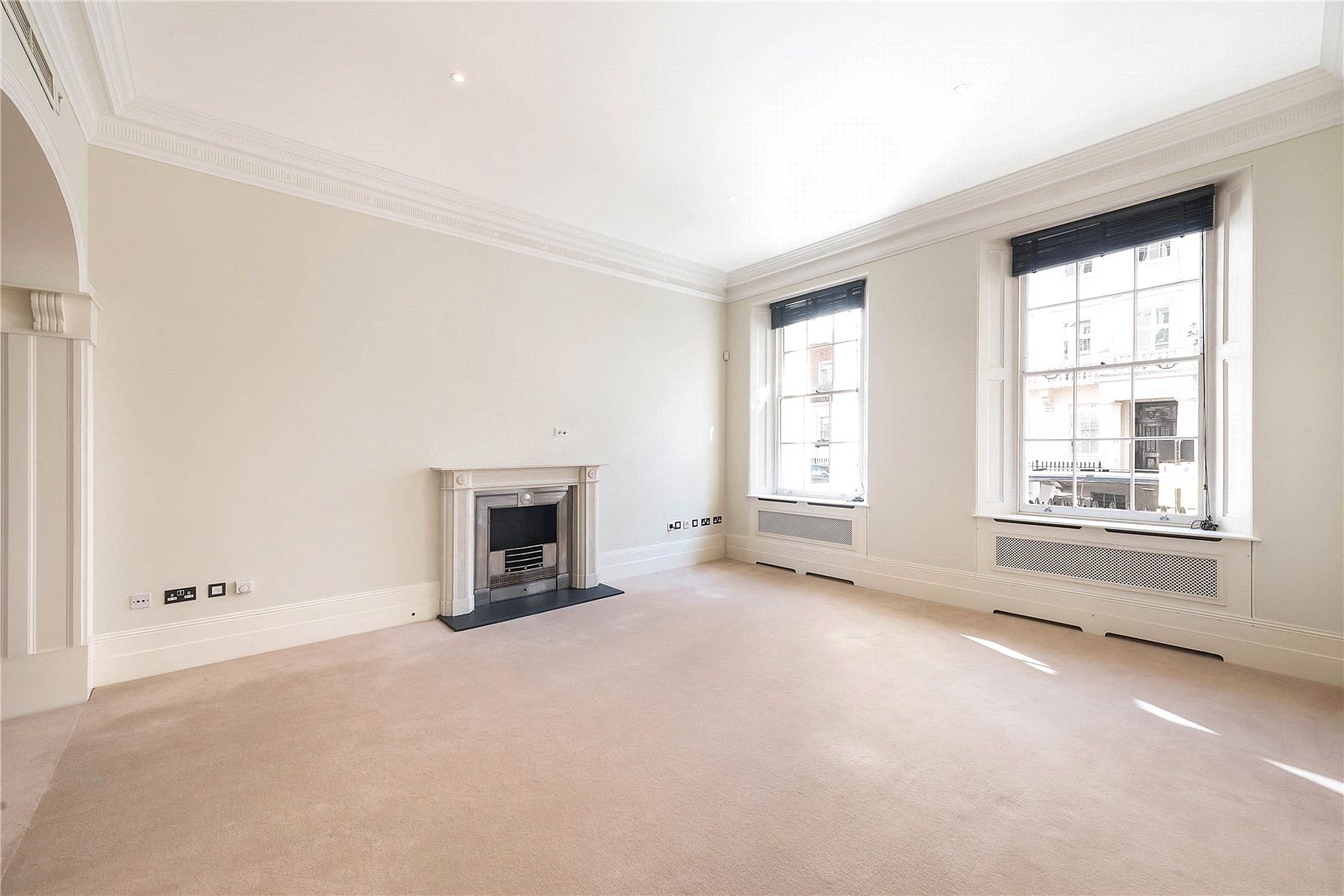
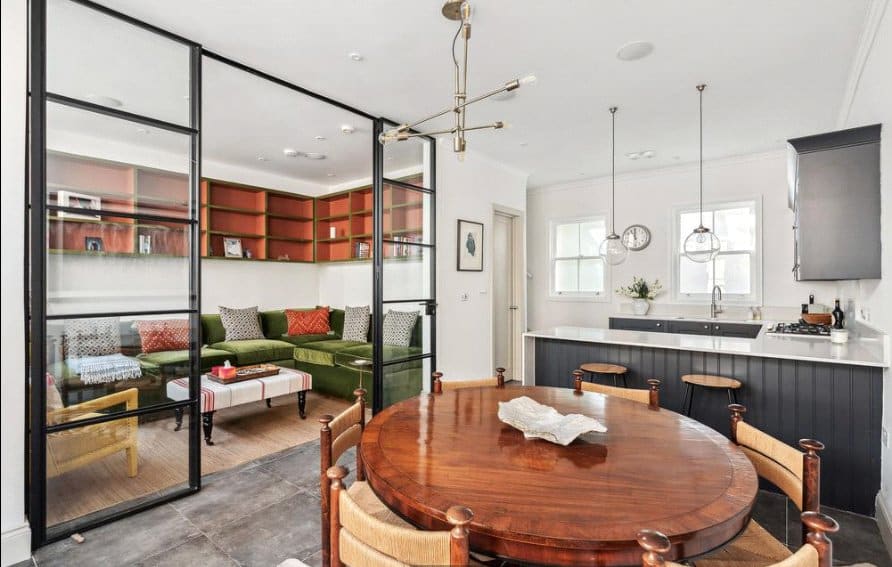
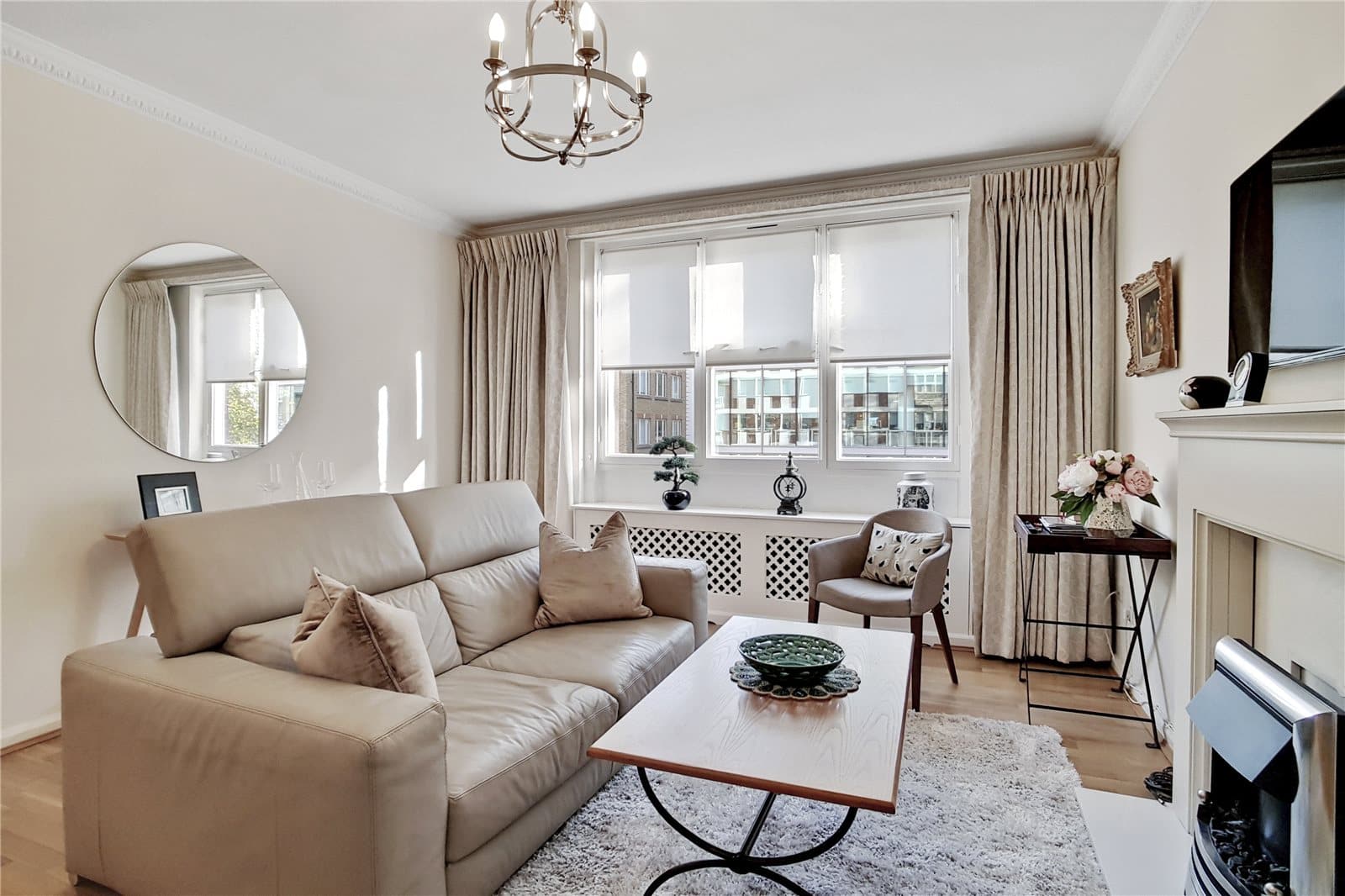
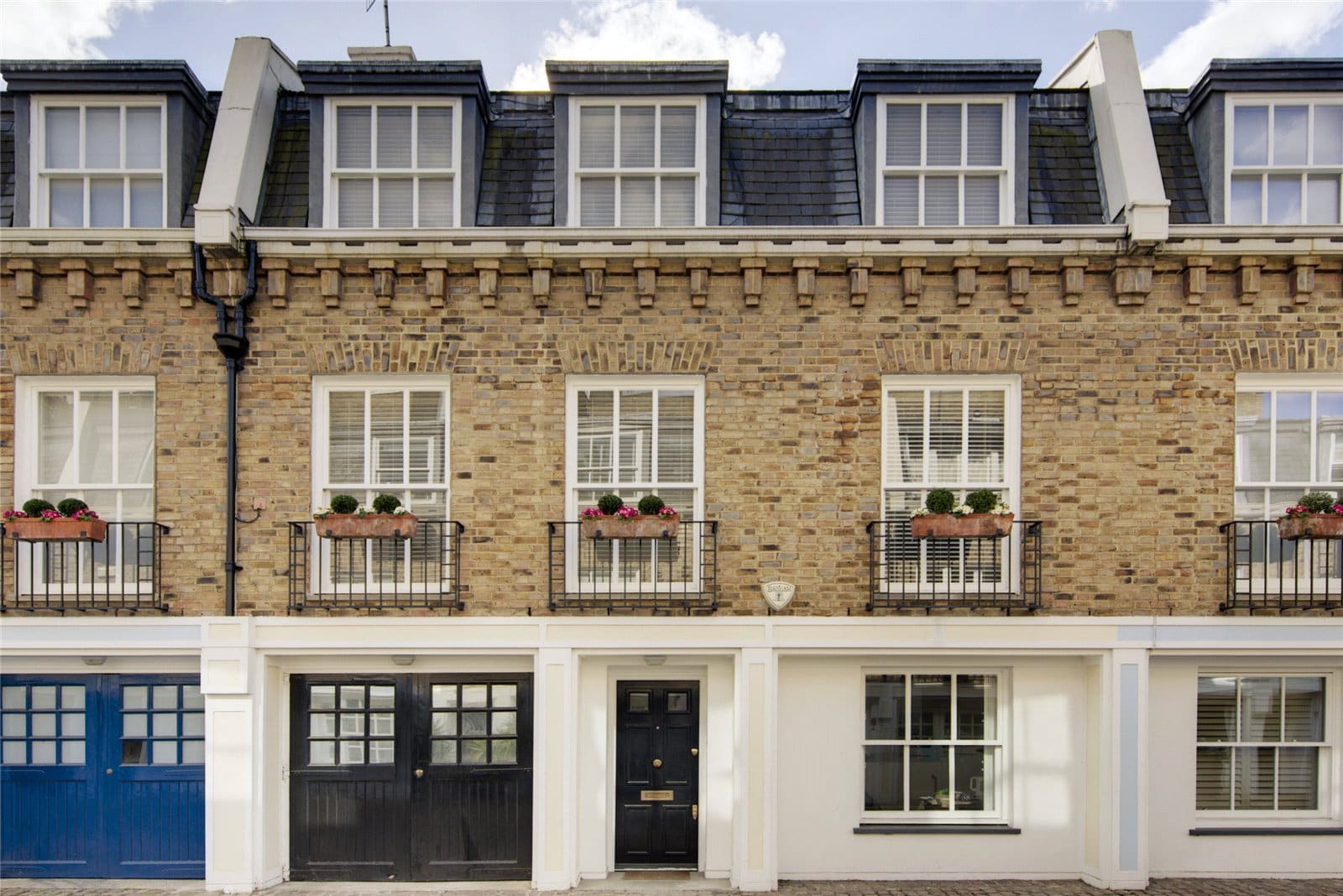
- Architecture: Belgravia is built almost entirely from the same white stucco terraces, mews houses and lateral apartments laid out by Thomas Cubitt in the 1830s and 1840s. Properties range from grand five and six storey houses around Belgrave Square and Eaton Square to smaller mews houses tucked behind them, most built as stabling and converted into some of the area’s most sought-after homes. The best of this residential property sits around Eaton Square, Wilton Crescent and Chester Square, where whole houses still come up for sale rather than the converted flats found on smaller streets nearby. Lygon Place and the streets behind Belgrave Square also hold some of the highest value houses, many of them freehold rather than the leasehold flats that make up most of the wider market.
- Developments: The Cundy Street Quarter is the largest scheme currently reshaping Belgravia, an 11 storey development bringing 333 homes including affordable, later living and open market housing, alongside new public space funded by a £10 million investment from the Grosvenor Estate. Nearby, Eaton Mews West is delivering the first new terrace of mews houses built in Belgravia since the 1950s, six houses due to complete in 2026 behind a restored Georgian façade. At 8 Eaton Lane, 42 luxury residences have already added fresh apartment stock to the area’s southern edge.
- Property prices: Belgravia remains one of the highest value pockets of London property, and its real estate rarely sits on the market for long despite the prices involved. The average sold price in Belgravia was around £2.35 million over the past year, according to Rightmove, with flats averaging roughly £1.63 million and terraced houses around £3.96 million. These figures swing more than in most areas because so few properties change hands here each year, and sold prices are currently down sharply on the 2023 peak of £4.62 million as a result. Across the wider City of Westminster, the Office for National Statistics, known as the ONS, recorded an average house price of £815,000 in 2026.
- Rental market: Rents across Westminster averaged £3,163 a month in 2026, according to the ONS, down 2.9% on the year, though prime stock in Belgravia itself lets for considerably more than this borough average given the concentration of large lateral apartments and full house lets. Demand from corporate tenants, diplomats and international landlords and tenants relocating to London continues to support the top end of the lettings market here, even as the wider rental market has cooled slightly over the past year.
Living In Belgravia
Life in Belgravia, London moves at a quieter pace than its postcode might suggest, built around a small number of very well kept streets rather than any single high street.
- Shopping: Motcomb Street is the closest thing Belgravia has to a high street, lined with independent boutiques, antique dealers and a Saturday food market at nearby Orange Square. Elizabeth Street and Eccleston Yards, both a short walk from Victoria, add further independent shops and a covered courtyard of newer retail units, while Sloane Street to the west carries the area’s main run of international fashion houses, including Harvey Nichols at its northern end.
- Eating & Drinking: Ebury Street holds some of Belgravia’s longest standing names, including the French bistro La Poule au Pot and the bakery Poilane, both trading from the same premises for decades. Around Pavilion Road and Eccleston Yards, newer openings such as Daylesford Organic and Wild by Tart sit alongside traditional pubs tucked into the mews streets, and the Saturday farmers’ market at Orange Square remains a fixture for fresh produce.
- Leisure & Recreation: Eccleston Yards has become something of a fitness destination in its own right, home to the boutique studio Barry’s and a branch of Hotpod Yoga, while The Lanesborough Club & Spa offers a private members’ gym and spa just north of Belgrave Square. For green space, Hyde Park and Green Park both sit a short walk from the northern edge of Belgravia, and the private gardens dotted through the area give many residential buildings their own outdoor space even without a public park nearby.
- Healthcare: The Belgravia Surgery and Belgrave Medical Centre on Pimlico Road both provide NHS general practice for the area, alongside a number of private clinics serving Belgravia’s international population. St Thomas’ Hospital and Chelsea and Westminster Hospital are the nearest NHS hospitals, both reachable within around twenty minutes by car.
The combination of well kept shopping streets, private green space and easy reach of central London hospitals and surgeries is one of the quieter reasons buyers and tenants continue to choose Belgravia over much noisier parts of the capital.
Places Of Interest
Belgravia sits within walking distance of some of London’s most significant landmarks, several of them on its own doorstep.
- Buckingham Palace – A short walk from Belgrave Square, the official London residence of the monarch has served as the centre of royal life since 1837 and remains a working palace today.
- Belgrave Square – The centrepiece of Belgravia, laid out by Thomas Cubitt from 1826 and now home to more than a dozen embassies, including those of Germany, Austria and Spain.
- Eaton Square – One of London’s largest garden squares, Eaton Square was built from 1827 and has been home to two British Prime Ministers, Stanley Baldwin and Neville Chamberlain.
- Apsley House – Known as Number One London, this was the home of the first Duke of Wellington and now holds his art collection at Hyde Park Corner.
- Wellington Arch – Standing opposite Apsley House, this triumphal arch was built in 1825 to commemorate victory over Napoleon and is topped by Europe’s largest bronze sculpture.
- The Lanesborough – This Grade II* listed building at Hyde Park Corner served as St George’s Hospital from 1733 until 1980, when it became one of London’s most exclusive hotels.
- St Peter’s Church, Eaton Square – A Grade II* listed Georgian church at the east end of Eaton Square, rebuilt after a fire and still used for concerts and services.
- Wilton Crescent – One of the most expensive streets in the country, this curving terrace was laid out by Cubitt and Seth-Smith in 1827 and is now home to several embassies.
- Chester Square – A quieter, smaller square than its neighbours, Chester Square was developed by Cubitt from 1835 and was home to Margaret Thatcher after she left Downing Street.
Belgravia Selling & Letting
- For sellers: Belgravia’s appeal rests on scarcity as much as location. The Grosvenor Estate’s management schemes restrict alterations and limit new building across most of the area, so supply rarely keeps pace with demand from buyers relocating to London. Many of the area’s older leasehold flats also carry real enfranchisement potential, and extending a lease or buying the freehold before marketing a property can add measurable value, something our specialism in leasehold enfranchisement across Belgravia is built around. Average sold prices here remain well above the wider City of Westminster figure, and freehold houses around Belgrave Square and Eaton Square continue to draw international interest even while the broader London market has cooled over the past year.
- For landlords: Demand for rental property in Belgravia comes largely from corporate tenants, diplomats and professionals relocating to central London, supporting rents that sit well above the Westminster borough average. The Renters’ Rights Act, in force since May 2026, has changed some of the detail around notice periods and rent increases, and getting this right matters more than ever for landlords letting high value homes. Lateral apartments with porterage and security tend may let fastest, particularly those close to Knightsbridge and Victoria.
- Property types in demand: Buyers continue to favour whole houses and lateral flats with outdoor space, particularly around Eaton Square, Wilton Crescent and Chester Square, while tenants tend to look for serviced apartments in secure buildings with a porter. Mews houses remain popular with both groups, valued for their privacy and their position just off the main garden squares.
If you’re considering a sale or a let in Belgravia, Best Gapp can talk you through the leasehold position on your property as well as current pricing, so book a valuation to find out where you stand.
Schools & Education
Explore the range of high-end schools present in Belgravia…
- Eaton House Belgravia (3-5 Eaton Gate, London, SW1W 9BA, Ages 2-8, boys, with girls admitted in the nursery) – Eaton House Belgravia has been educating young boys since 1897, making it one of the longest established schools in the area. It prepares boys for the competitive 7+ and 8+ entrance exams to London’s leading prep schools, drawing pupils from across Westminster, Chelsea and Kensington. Former pupils include the writer Philip Pullman, actor Eddie Redmayne and Prime Minister Harold Macmillan. Inspectors have praised the school’s pupils as confident and articulate, and noted a strong staff commitment to pupils’ wellbeing.
- Garden House School (Turks Row, Chelsea, London, SW3 4TW, Ages 3-11, mixed) – Garden House School educates girls and boys from age three to eleven a short walk south of Belgravia. Founded in 1951, it moved to its current Turks Row site in 2004. A 2024 inspection by the Independent Schools Inspectorate found the curriculum well planned and pupils making good progress across a wide range of subjects, with particularly strong development of language skills. Most leavers move on to senior London day or boarding schools.
- Hill House International Junior School (17 Hans Place, Knightsbridge, London, SW1X 0EP, Ages 4-13, mixed) – Hill House International Junior School is one of London’s largest prep schools, founded in Switzerland in 1949 before establishing its main base in Knightsbridge. King Charles III attended as a young boy in the 1950s. Still run by the founding Townend family, the school teaches children from over 60 nationalities and is known for its bright mustard and green uniform. A 2022 inspection rated the school’s provision as good across all areas, a marked improvement on its 2014 result.
- Knightsbridge School (67 Pont Street, London, SW1X 0BD, Ages 3-16, mixed) – Knightsbridge School opened in 2006 to meet demand for pre-prep places in central London and has since grown into an all-through day school for ages 3 to 16. Pupils are drawn heavily from Belgravia, Chelsea and South Kensington, and over half speak English as an additional language. The school is inspected by the Independent Schools Inspectorate and has built a reputation for strong performing arts provision alongside a broad academic curriculum. Leavers move on to a wide range of London day schools.
- Francis Holland School, Sloane Square (39 Graham Terrace, London, SW1W 8JF, Ages 11-18, girls) – Francis Holland School, Sloane Square traces its roots back to 1881, when it opened with just 13 pupils on Coleshill Street in Belgravia. Now based on Graham Terrace, it educates girls aged 11 to 18 and was named Sunday Times Independent Secondary School of the Year in 2023. A 2024 inspection by the Independent Schools Inspectorate found a positive culture in which pupils feel safe and quickly develop self-awareness and respect for others.
- Eaton Square School (55-57 Eccleston Square, London, SW1V 1PH, Ages 2-11, mixed) – Eaton Square School began life inside St Peter’s Church on Eaton Square nearly 40 years ago, before moving to its current site on Eccleston Square. It is a co-educational nursery and prep school for children aged 2 to 11, popular with international families living in central London, with around half its pupils speaking English as an additional language. The school joined the Dukes Education group in 2018 and has been recognised for its art and design programme by the Independent Schools Association.
For more information about the schooling options in Belgravia, take a look here.
Jobs & Employment
Belgravia itself has very little office space, the area is built almost entirely around housing, embassies and high-end retail rather than commercial premises. Many of the area’s working residents are connected to its embassies, family offices, private banks and the antiques and interior design trade centred on Pimlico Road and Motcomb Street, sectors that have always found a natural home in this part of London.
The bigger employment centre on Belgravia’s doorstep is Victoria, a short walk to the east. Cardinal Place and the offices around Victoria Street host firms including Experian, EDF Energy and Microsoft, while luxury fashion houses such as Burberry and Giorgio Armani have based their UK operations in the same area. Around £2 billion has been earmarked for further office development in Victoria over the coming years, adding to its position as one of the busiest business districts in central London.
For employers, Victoria’s transport links, anchored by Victoria Station, make it easy to draw staff from across London and the South East. For Belgravia itself, the presence of this employment base on the doorstep supports consistent rental demand from professionals who want a short commute into central London without living above their own office.